How Am I Coping? Dialogue Circles Explore Societal Resilience
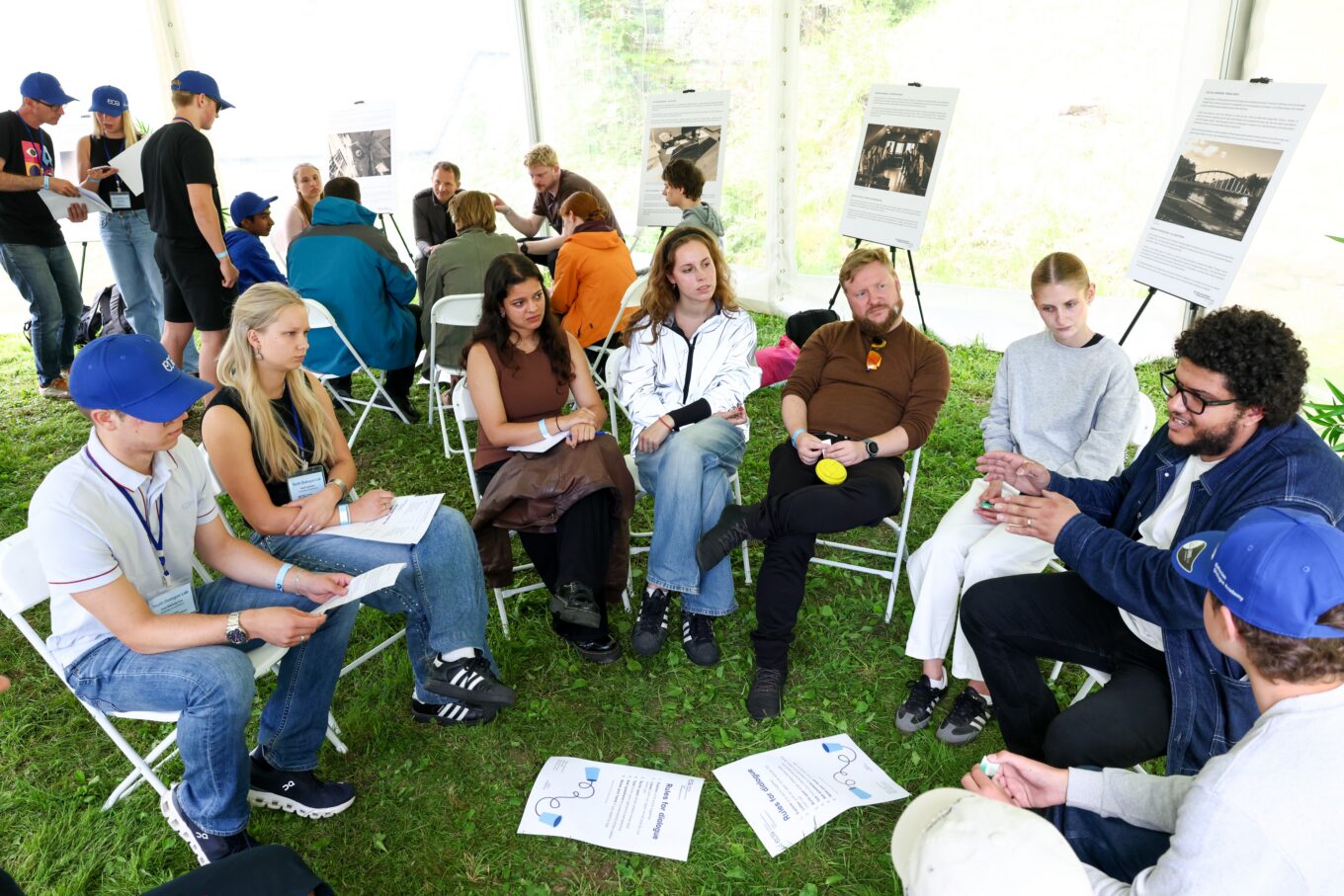
Dialogue circle at the Opinion Festival 2026. Photo credit: Kristi Sits
In spring 2026, 62 dialogue circles on the topic “How Am I Coping?” took place across Estonia, bringing people together to discuss the changing security situation, their sense of security and everyday coping. The aim was to provide a safe, non-judgemental space where participants could share their experiences, listen to others and reflect on what helps individuals and communities navigate challenging times. The report about the dialogues, prepared by University of Tartu researchers Merle Linno and Marko Uibu, is now available and provides valuable input for strengthening society’s crisis preparedness and resilience.
The dialogue circles held across Estonia this spring showed that societal resilience depends not only on crisis plans and emergency supplies, but also on people’s sense of security, trust and community ties. The report, compiled by University of Tartu researchers, brings together the experiences of 497 people, exploring how the threat of war affects everyday life and what helps people cope in times of uncertainty.
Crisis preparedness starts with people and relationships
Changes in the security situation and the threat of war affect more than a country’s defence capabilities or preparedness for crises. They also influence people’s everyday choices, plans for the future, mental well-being and their sense of whether and how they can find help and support in difficult circumstances.
The dialogue circles explored what genuinely helps people feel safer, how they can cope with uncertainty, and what kind of support family members, friends and communities can provide. Rather than seeking ready-made answers, the discussions focused on understanding people’s diverse experiences.
One of the report’s key messages is that societal resilience is built through both practical crisis preparedness and interpersonal trust, social connections and opportunities to speak openly about concerns.
According to Kairi Tilga, Head of the Estonian Cooperation Assembly, the experiences gathered through the dialogue circles help us understand crisis preparedness through the lens of people’s everyday lives. Alongside emergency supplies, infrastructure and action plans, it is important to consider whether people feel heard, trust one another and can rely on their communities for support when needed.
Dialogue helps strengthen resilience
The 62 dialogue circles held in spring 2026 brought together 497 participants. Such discussions create opportunities to address difficult topics in a calm and respectful manner, without the aim of winning an argument or reaching a unanimous opinion.
Listening to different experiences helps us better understand how people perceive uncertainty, what their needs are and where they turn for support. It also highlights that crisis preparedness is not solely the responsibility of public authorities or emergency and security services. Local communities, organisations and individuals themselves also have an important role to play.
An open culture of dialogue helps strengthen social cohesion and foster an environment in which people feel comfortable expressing their concerns, asking for help and supporting one another. These relationships can prove crucial when everyday life is disrupted and decisions must be made under uncertain circumstances.
Estonia’s participation in Nordic-Baltic dialogue cooperation
The dialogue circle initiative “How Am I Coping?” is part of the international Borderland Dialogues cooperation, which aims to promote a culture of dialogue and explore how dialogue can help societies navigate uncertain and rapidly changing times. Similar discussions are also being organised in Finland, Latvia, Lithuania, Norway and Poland. In Estonia, the organisation of the dialogue circles drew, among other things, on the experience of Finland’s nationwide dialogues.
This cooperation enables partners to share experiences and develop approaches that support social cohesion, public participation and communities’ ability to adapt to change. Strengthening societal resilience is not just about preparing for a specific crisis; it also requires everyday efforts to build trust, cooperation and mutual understanding.
The initiative was implemented by the Estonian Cooperation Assembly in cooperation with the University of Tartu and the Government Office of Estonia. The project was funded by the Nordic Council of Ministers’ Office in Estonia, supporting the development of a culture of dialogue, social cohesion and crisis preparedness.
The report “How Am I Coping?” brings together the experiences of participants in the dialogue circles and offers an opportunity to explore how people perceive security, uncertainty and coping in a changing security environment.
Explore the full report and its recommendations: Estonian Cooperation Assembly website.