“The Ballot Paper” Exhibition September 2026 – March 2027

What story can a ballot paper tell?
A ballot paper is one of the most everyday symbols of democracy. Most of the time, we pay attention to it for just a few moments – we choose a candidate or a list, mark our choice and place the ballot in the ballot box. But have you ever wondered why a ballot paper looks the way it does? Why can ballot papers serving the same purpose have completely different designs and layouts in different countries?
The exhibition “The Ballot Paper” offers a glimpse into this often-overlooked part of democracy. It takes visitors on a journey through electoral history, where a small piece of paper and a ballot box tell stories about social change, politics and the people who have had the opportunity to make a difference with their vote.
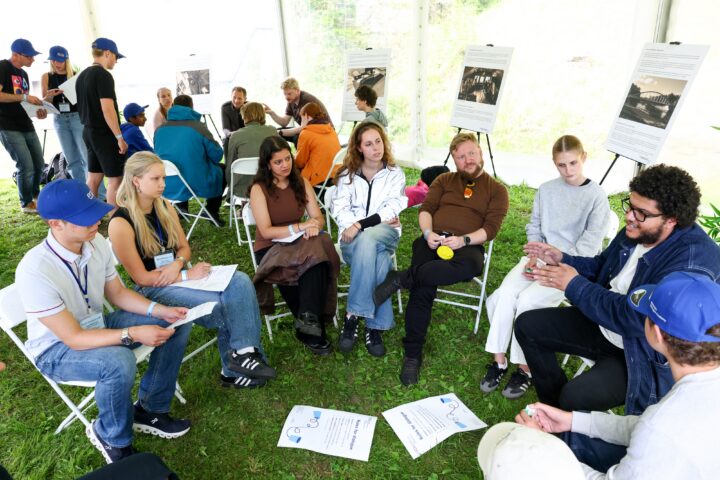
The exhibition was first presented in Estonia at last summer’s Opinion Festival in Paide, where it attracted considerable interest among visitors. In 2025, it travelled to Pärnu, Kuressaare, Narva, Tallinn and Valga. Now, “The Ballot Paper” continues its journey, reaching new locations across Estonia.
The history of elections fits on a single ballot paper
The exhibition allows visitors to compare electoral cultures from different periods and countries and explore how the ways in which people express their political will have changed over time.
Did you know, for example, what an Estonian ballot paper looked like in 1919? Or what kind of ballot paper was used in Denmark as early as 1864? The exhibition also takes visitors further afield. You can explore the ballot boxes used in Finland in 1907, when the country held the world’s first national elections in which women had the right both to vote and to stand for election to parliament. The exhibition also offers a glimpse into the history of elections in Ethiopia.
These are not simply old pieces of paper and ballot boxes. Every design, symbol and detail of an electoral system reflects the society of its time. A ballot paper can reveal which political ideas were important at a particular moment, who was given the right to participate in public life, and how democracy has developed in different countries.
Can a single ballot paper change history?
A ballot paper may seem like a small and simple thing, but its significance is profound. The decisions marked on that piece of paper can shape political directions, governments and the future of society.
“The Ballot Paper” invites visitors to look at elections from a slightly different perspective. It encourages us to notice details we would normally overlook and to reflect on what it really means to cast your vote.
The exhibition is travelling across Estonia
📍 September 2026 – Haapsalu Library
📍 October 2026 – Annelinn Library
📍 November 2026 – Jõhvi Gymnasium
📍 December 2026 – Kohtla-Järve Gymnasium
📍 January 2027 – Jõgeva City Library
📍 February 2027 – Viljandi City Library
📍 March 2027 – Rapla Central Library
The exhibition is free of charge and open to everyone – including students and teachers, people interested in politics, and simply curious voters.
Exhibition Curator: Max Valentin
Exhibition coordinators in Estonia: Merle Levassor and Andry Arro (andry.arro@norden.ee)
Come and discover the story that a single ballot paper can tell! You may find yourself looking at your next ballot paper in a completely different way after visiting the exhibition.